



Best USB Microphones 2025: Complete Buyer's Guide
USB microphones offer plug-and-play simplicity for podcasters, streamers, and content creators. We compare the best options on sound quality, polar patterns, software features, and price to find the right mic for your setup.
- Best Overall: Shure MV7+ (XLR+USB, DSP, built-in headphone monitoring)
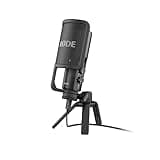
- Best for Podcasting: Rode NT-USB (studio-quality sound, built-in comp)
- Best for Streaming: HyperX QuadCast S (RGB, multi-polar patterns)
- Best Large Diaphragm: Blue Yeti X (multi-pattern, LED metering)
- Best Value: Rode NT-USB Mini (compact, Broadcast quality under $100)
Specs Comparison
| Model | Connection | Polar Pattern | Sample Rate | Bit Depth | Price |
|---|---|---|---|---|---|
| Shure MV7+ | USB-C + XLR | Cardioid | 48kHz | 24-bit | ~$250 |
| Rode NT-USB | USB-C | Cardioid | 48kHz | 24-bit | ~$170 |
| HyperX QuadCast S | USB-C | Cardioid/Omni/Stereo/Bi | 48kHz | 16-bit | ~$150 |
| Blue Yeti X | USB-A | Cardioid/Omni/Stereo/Bi | 48kHz | 24-bit | ~$170 |
| Rode NT-USB Mini | USB-C | Cardioid | 48kHz | 24-bit | ~$100 |
Detailed Reviews
Shure MV7+ — Best USB Mic for Serious Podcasters
The MV7+ builds on the legendary MV7 with an upgraded capsule, DSP controls (EQ, compression, limiter) accessible via ShurePlus MOTIV app, and USB-C. The dual XLR+USB connection lets you start with USB and upgrade to a full audio interface later. The built-in headphone amp with near-zero latency monitoring is essential for long recording sessions.
- Pros: Dual XLR+USB, DSP processing in MOTIV app, zero-latency monitoring, premium build
- Cons: Cardioid-only, $250 price, requires desk stand or arm (not included)
Rode NT-USB Mini — Best Compact USB Mic
The NT-USB Mini packs broadcast-quality cardioid sound into a palm-sized form factor. The integrated pivot adapter and magnetic desk stand make it easy to position anywhere. Zero-latency headphone monitoring and natural, detailed sound quality make it an exceptional value at $100.
- Pros: Compact design, excellent sound quality, magnetic stand included, $100 price
- Cons: Fixed cardioid only, no software DSP, smaller diaphragm than NT-USB
How to Choose
For home recording and streaming: HyperX QuadCast S or Rode NT-USB
The QuadCast S offers multi-pattern flexibility for recording interviews or room ambience. The NT-USB provides better sound quality for solo voiceover work.
For podcasters who may upgrade later: Shure MV7+
The XLR+USB dual connection future-proofs your setup — start with USB today, add an interface when your workflow demands it.
FAQ
Q: Do I need an audio interface with a USB mic?
A: No — USB mics connect directly to your computer. An audio interface is only needed when using XLR microphones. The Shure MV7+ is unique in supporting both.
Q: What sample rate do I need for podcasting?
A: 48kHz/24-bit is the broadcast standard and what all mics on this list support. 44.1kHz is also fine for audio-only podcasts. Higher sample rates (96kHz+) are overkill for voice recording.