


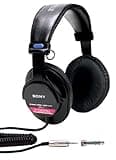

On-ear headphones (also called supra-aural headphones) sit on the outer ear rather than around it, making them smaller, more portable, and lighter than over-ear headphones. They occupy a distinct niche between earbuds (full in-canal) and over-ears (full circumaural) — offering better audio quality than earbuds while remaining more portable than large headphones. This guide clarifies when on-ear makes sense over the alternatives.
On-Ear vs Over-Ear vs IEM: When On-Ear Wins
| Category | On-Ear Wins | On-Ear Loses |
|---|---|---|
| Portability | More compact than over-ear, folds smaller | Less compact than earbuds/TWS |
| Sound quality | Better soundstage/audio accuracy than earbuds | Less immersive bass than over-ear |
| Passive isolation | More isolation than open-back over-ear | Less isolation than closed-back over-ear or IEM |
| Comfort (extended use) | Lighter weight for casual use | Ear pressure causes fatigue after 1-2 hours |
| Wired studio use | Good for mixing/mastering (some audiophile on-ears) | Most studios prefer full over-ear monitoring |
The honest limitation: On-ear headphones press against your ears, which many users find uncomfortable after 1-2 hours. If you wear headphones for extended sessions, over-ear headphones are almost always more comfortable. On-ears are best for shorter listening sessions, commuting, and users who prioritize portability.
Open-Back vs Closed-Back On-Ear
Open-back on-ear: Sound passes through the earcup. More natural soundstage, but anyone nearby can hear your audio. Used in audiophile applications and some studio monitoring. Grado and Koss are famous for open-back on-ears.
Closed-back on-ear: Standard for portable use. More passive noise isolation, less sound leakage. Suitable for commuting and public spaces.
Best On-Ear Headphone Picks
Premium Wireless On-Ear
Sony WH-1000XM5 — Note: Sony's XM series are over-ear. For wireless on-ear specifically, the category is dominated by older designs. Most modern ANC-focused wireless headphones have moved to over-ear for better ANC performance and comfort.
Bang & Olufsen Beoplay H95 — The premium on-ear wireless benchmark. Titanium earcups, premium materials, excellent ANC for an on-ear design. Exceptional for those who specifically want premium on-ear aesthetics and quality. At ~¥120,000, a luxury purchase.
Marshall Major IV Wireless — Iconic Marshall guitar-amp aesthetic in a portable on-ear. 80-hour battery life (best in category). Warm, bass-forward sound signature typical of Marshall. Compact foldable design. More affordable premium option.
Mid-Range Wireless
Sennheiser HD 458BT — Clean Sennheiser sound with ANC in an on-ear form factor. Good frequency response and clarity compared to many bass-heavy competitors. Comfortable padding for an on-ear design. Good value at ¥15,000-20,000.
Sony WH-CH520 — Budget wireless on-ear from Sony with multipoint Bluetooth for two devices simultaneously. 50-hour battery. Light and comfortable. Best budget wireless on-ear.
Audiophile Wired On-Ear
Grado SR80x — Classic open-back on-ear. Grado's house sound: forward midrange, detailed, excellent imaging. No padding comfort for long sessions, but the sound at this price point is remarkable. A classic recommendation for budget audiophiles who want a different listening perspective.
Koss KPH30i — Extremely inexpensive open-back on-ear that punches far above its weight. Famous in the budget audiophile community. Limited availability but exceptional value when found.
Frequently Asked Questions
Are on-ear headphones comfortable for long sessions?
For most users, no — the clamping pressure on the outer ear causes fatigue and discomfort after 1-2 hours. This is the category's primary limitation. Users who specifically need on-ear headphones for their compact size should look for models with thick padding and adjustable headband tension. If you regularly wear headphones for 2+ hours, over-ear (circumaural) headphones that sit around the ear are significantly more comfortable and are worth the larger size.
Why don't on-ear headphones have as good ANC as over-ear?
ANC performance depends partly on the seal between the headphone and your ear. Over-ear headphones create a sealed cavity around the entire ear, which is ideal for noise-cancelling microphones to measure and counteract incoming noise. On-ear headphones rest on the outer ear with a less consistent seal, making the ANC measurement less effective, particularly at low frequencies (airplane engine drone). The best ANC always comes from over-ear designs for this reason.
For walking/commuting, on-ear or earbuds/TWS?
For commuting specifically, TWS earbuds (AirPods Pro, Sony WF-1000XM5) have largely replaced on-ear as the preferred portable audio solution: better ANC, less bulk, no headband. On-ear headphones are better for users who don't want in-ear fit, prefer the open feel of headphones, or want more bass output than most TWS earbuds provide. If you've tried both and find IEM/TWS uncomfortable, on-ear remains an excellent portable option.
What's the difference between on-ear and in-ear for sound quality?
Generally, open-back on-ear headphones produce a more natural, speaker-like soundstage that in-ear can't replicate. This makes them preferred by some audiophiles for home listening. However, closed-back in-ear monitors (IEMs) at equivalent price points often produce more detail, better bass response (from the in-canal seal), and better isolation. The choice often comes down to preference: headphone-style listening with a wider soundstage vs IEM precision with more isolation. Neither is objectively "better" — they serve different listening preferences.
