



Best GPUs 2025: Complete Graphics Card Buyer's Guide
2025 brings NVIDIA's Blackwell RTX 5000 series and AMD's RDNA 4 RX 9000 series. We compare the best GPUs across 1440p gaming, 4K gaming, ray tracing, AI workloads, and price-to-performance.
- Best High-End: NVIDIA RTX 5080 (DLSS 4 Multi Frame Generation, 16GB GDDR7)
- Best Value High-End: NVIDIA RTX 5070 Ti (15-18% slower than 5080, ~40% less expensive)
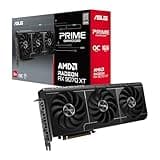
- Best AMD Flagship: AMD RX 9070 XT (FSR 4 AI upscaling, 16GB GDDR6)
- Best 1440p Value: AMD RX 7800 XT (reliable RDNA 3, ~$350)
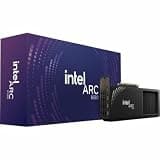
- Best Budget 1440p: Intel Arc B580 (12GB VRAM, surprisingly capable, ~$250)
Performance Comparison (estimated 1440p gaming)
| GPU | VRAM | TDP | 1440p Native | 4K Native | Price |
|---|---|---|---|---|---|
| NVIDIA RTX 5080 | 16GB GDDR7 | 360W | Excellent | Excellent | ~$1,000+ |
| NVIDIA RTX 5070 Ti | 16GB GDDR7 | 300W | Very Good | Very Good | ~$750 |
| AMD RX 9070 XT | 16GB GDDR6 | 304W | Very Good | Good | ~$550 |
| AMD RX 7800 XT | 16GB GDDR6 | 263W | Good | Moderate | ~$380 |
| Intel Arc B580 | 12GB GDDR6 | 190W | Good | Moderate | ~$250 |
Detailed Reviews
AMD RX 9070 XT — Best Price-to-Performance GPU
RDNA 4 brings AMD's most significant generational improvement in years. The RX 9070 XT uses hardware ray tracing acceleration that finally closes the gap with NVIDIA's RT performance. FSR 4 (AI-based upscaling) replaces the older spatial FSR 3 and delivers quality approaching DLSS. At ~$550 with 16GB VRAM, it significantly outperforms anything NVIDIA offered at this price in 2024.
- Pros: Excellent price-to-performance, FSR 4 AI upscaling, 16GB VRAM, improved RT
- Cons: NVIDIA DLSS ecosystem advantage in some games, higher power draw than Intel
Intel Arc B580 — The Budget 1440p Surprise
Intel's B580 surprised the market with 12GB GDDR6 at $250 — the most VRAM available at this price. XeSS upscaling handles most games well, and the Battlemage architecture corrected driver issues from Alchemist. For budget builders who want solid 1440p gaming with headroom for VRAM-heavy modern titles, the B580 is a strong option that was unavailable previously.
- Pros: 12GB VRAM at $250, solid 1440p performance, good efficiency (190W TDP)
- Cons: Limited Ray Tracing performance, Intel GPU ecosystem is newer/less mature
FAQ
Q: Is DLSS 4 Multi Frame Generation worth it?
A: DLSS 4 MFG on RTX 5000 series can generate up to 3 additional frames per rendered frame, dramatically boosting apparent frame rates. The trade-off is added latency (mitigated by NVIDIA Reflex) and some ghosting in fast motion. For 4K gaming at ultra settings, it makes previously unplayable frame rates viable.
Q: How much VRAM do I need in 2025?
A: 8GB is becoming inadequate for some modern titles at high settings. 12GB covers most games at 1440p. 16GB is recommended for 4K gaming or AI workloads. For local AI image generation (Stable Diffusion), 24GB offers the best experience.