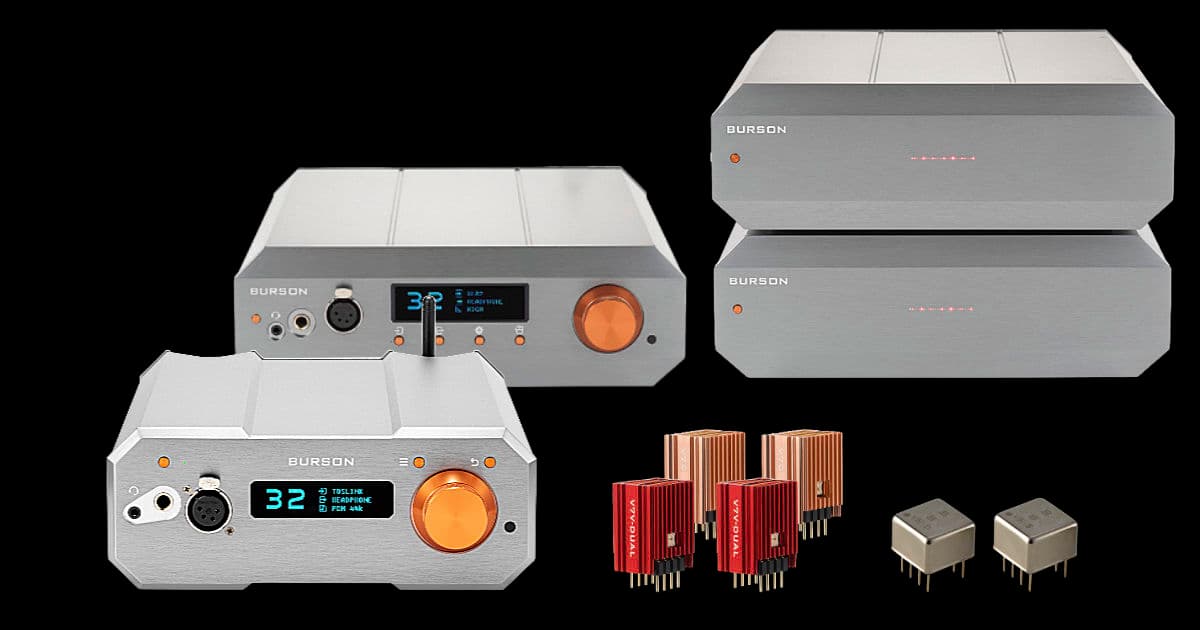
A DAC (Digital-to-Analog Converter) and headphone amplifier can transform the listening experience from your existing headphones — but only if chosen correctly. This guide explains what these components actually do, when you need them, and how to pick the right one for your setup.
What Does a DAC Do?
Every device that plays digital audio needs a DAC to convert 1s and 0s into an analog electrical signal. Your phone, laptop, and gaming console all have built-in DACs. An external DAC typically provides:
- Higher quality conversion — lower noise floor, better channel separation
- Higher bit depth and sample rate support — 32-bit/768kHz vs 16-bit/48kHz in cheap integrated chips
- Galvanic isolation — eliminates ground loop hum and USB noise from the computer
For most listeners, the difference becomes audible when combined with quality headphones (¥20,000+) in a quiet environment.
What Does a Headphone Amplifier Do?
Headphones need current to move their drivers. High-impedance headphones (150Ω+) like the Sennheiser HD 600 or Beyerdynamic DT 990 Pro demand more power than a laptop headphone jack can provide. An amplifier:
- Drives high-impedance headphones to their potential
- Provides cleaner power than USB-powered sources
- Reduces distortion at high volumes
Low-impedance IEMs (16-32Ω) rarely need an amplifier — they can be driven directly. High-sensitivity IEMs can actually sound worse from a powerful amp (background hiss becomes audible).
Do You Need a DAC/Amp?
| Your Situation | Recommendation |
|---|---|
| IEMs under ¥20,000 | Probably not needed. Phone/laptop is fine. |
| IEMs ¥20,000+ or planars | A portable DAC/amp improves performance notably. |
| Over-ear 16-80Ω headphones | Recommended — most benefit noticeably. |
| High-impedance (150Ω+) headphones | Required for full performance. |
| Planar magnetic headphones | Require current — a proper amp is essential. |
| Background noise from PC headphone jack | External DAC fixes this immediately. |
Combined Units vs Separates
DAC/Amp combos (FiiO K7, SMSL DO300EX, Topping DX3 Pro+) are the practical choice for most people: single power supply, single device, good value. For desktop use, a combo unit is almost always the right choice.
Separate DAC + Amp makes sense at the ¥100,000+ tier where each component can be individually upgraded, or when you need a specific DAC for balanced output feeding a power amplifier for speakers.
Balanced vs Single-Ended Output
Balanced output (4.4mm Pentaconn or XLR) provides twice the voltage swing compared to single-ended (3.5mm/6.35mm), resulting in:
- More headroom for demanding headphones
- Better channel separation (theoretically)
- Lower noise floor in some implementations
To use balanced output, your headphone cable must also be balanced (or be re-terminated). Many audiophile headphones support balanced cables. For most IEMs, the practical difference is minimal.
Key Specifications
SNR (Signal-to-Noise Ratio)
Higher is better. 110 dB SNR+ is excellent for desktop DACs. Budget units often measure 95-105 dB, which is fine for most headphones but audible on sensitive IEMs.
THD+N (Total Harmonic Distortion + Noise)
Lower is better. Modern flagship chips (ES9038Pro, AK4499EX) achieve -120 dB THD+N. For audibility, anything below -100 dB is inaudible to human hearing under normal listening conditions.
Output Power
Measured in mW at a given impedance. A general guideline:
- IEMs (16-32Ω): 50-100 mW more than sufficient
- Sennheiser HD 600 (300Ω): 150+ mW recommended
- Planar magnetics (Hifiman Arya, HE400se): 500mW+ ideal
Budget Tiers
Under ¥10,000 — Entry
The FiiO BTR7 (portable BT/USB DAC/amp) and Topping NX4 serve IEMs and portable use. Sound quality is good but limited power for demanding headphones.
¥10,000–¥30,000 — Sweet Spot
The FiiO K7 is the benchmark here: AKM AK4493SEQ dual-DAC, balanced 4.4mm output, 2000mW at 32Ω. Drives virtually any headphone without clipping. Excellent objective measurements and value.
¥30,000–¥80,000 — Enthusiast Desktop
The SMSL DO300EX and Topping L70 enter reference-grade territory with ES9039Q2M/NFCA implementations. The iFi Pro iDSD Signature offers tube or solid-state topology switching for tonal variety.
¥80,000+ — Reference / Audiophile
The Luxman DA-250 and FiiO K9 Pro ESS represent desktop flagships. At this level, you're paying for specific sonic character, build quality, and support for DSD512/PCM768 playback. Diminishing returns are significant — spend here only if your headphones cost more.
Portable DAC/Amps: Dongles & DAPs
If you listen primarily from a phone or on the go:
- USB-C dongles (FiiO KA17, iFi GO bar) — Plugs directly into your phone, no battery needed, excellent sound quality in a tiny form factor
- DAPs (Digital Audio Players) — Shanling M6 Ultra, FiiO M11S Plus — dedicated music players with audiophile-grade internal DAC/amp, local file playback, streaming apps
- Portable amps/DACs — FiiO Q7, iFi hip-dac 3 — battery-powered, pair with any source via Bluetooth or USB
Frequently Asked Questions
Can I hear the difference between a budget and expensive DAC?
Blind listening tests consistently show most people cannot reliably distinguish between DACs measuring above -100 dB THD+N when using the same headphones. The amplifier and headphones have far greater audible impact. That said, an external DAC/amp almost always sounds cleaner than a laptop's built-in audio — the background noise reduction alone is immediately perceptible.
What's the difference between MQA, DSD, and PCM?
PCM (Pulse Code Modulation) is the standard digital audio format — 16-bit/44.1kHz for CD, up to 32-bit/768kHz for high-resolution. DSD (Direct Stream Digital) is used in SACDs and audiophile downloads. MQA is a proprietary lossy compression scheme for high-res streaming (Tidal) — support is declining as Tidal has moved away from it. For most listeners, high-quality 24-bit/96kHz PCM files are indistinguishable from DSD in double-blind tests.
Does the DAC chip brand matter? ESS vs AKM vs Cirrus Logic?
The implementation (output stage, power supply, filtering) matters far more than the DAC chip brand. A well-implemented AKM AK4490 can outperform a poorly implemented ES9038Pro. That said, modern flagship chips from all three manufacturers all measure excellently. Focus on the complete unit's measurements (ASR Audio Science Review publishes objective data) rather than the chip alone.
Will a DAC/amp make my IEMs sound better?
It depends on your source. From a phone with audible hiss, a quality DAC/amp with low output impedance (under 1Ω) will provide a cleaner, blacker background. From a modern laptop with low noise, the improvement is subtle. For sensitive IEMs, prioritize low noise floor (high SNR) and low output impedance over raw power output.
What output impedance should I look for with IEMs?
Under 1Ω output impedance for IEMs. High impedance outputs change the frequency response of multi-BA IEMs because the armature drivers' impedance varies by frequency. A 10Ω output from an amp will audibly alter the sound of IEMs rated at 16Ω. Most quality DAC/amps spec under 0.5Ω output impedance at the 4.4mm balanced output.